
past faculty RESEARCH
Each year, the Montana Water Center awards funding to Montana University System faculty through the Faculty Seed Grant Program. See below for more information on past Faculty Seed Grant projects.
2019 FACULTY SEED GRANTS


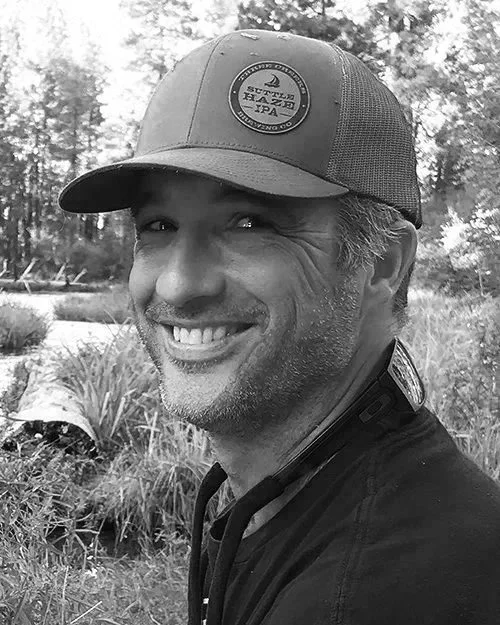


DR. Lisa Eby and Dr. Ben Colman: Assessing the costs and benefits beaver dam analogs to create resilience to climate change for aquatic ecosystems
The removal of beaver from the landscape has been a major contributor to increased stream channel incision and loss of connection between the stream channel and its floodplain. These changes have been linked to lowering of the water table, decreased base flows, warmer water temperatures, and reduced channel complexity. In response to a warming climate, some managers in the western US are increasingly using Beaver Dam Analogs (BDAs) as a technique for restoring streams experiencing effects of beaver, drought, and decreased late season flows. Research surrounding BDAs have primarily been completed in Utah, which are very different watersheds than western MT. Despite their utility as a water resources restoration technique, the broader range of effects on element pools, cycling, and the biota of aquatic systems where BDAs are installed are not well understood.
This study stems out of growing concerns about whether these structures and subsequent beaver establishment on a novel landscape with lower base flows, warmer temperatures, and ubiquitous nonnative species might result in more harm than good in certain watersheds for the native biota. This research will address specific concerns about increased surface area from impoundments increasing temperatures to a problematic range for native fish, dams restricting fish passage to upstream spawning habitat and cool water refugia, and impoundments altering habitat that promotes nonnative species over native species.
Dr. Eby is a professor of Aquatic Ecology and Undergraduate Program Director of Ecosystem Science & Restoration in the W.A. Franke College of Forestry and Conservation at the University of Montana. Dr. Colman is an assistant professor of aquatic ecosystems ecology in the W.A. Franke College of Forestry and Conservation at the University of Montana.
(Dr. Colman is currently an associate professor and leads the Ecosystem Lab at the University of Montana)
DR. Eric Sproles: Developing cloud-based tools to predict monthly streamflow in western montana
Mountain snowpack is an essential water resource for people, economies, and ecosystems in Montana, the western United States, and across the Earth. Despite its importance, measurements of mountain snowpacks are sparse, and often rely on hydro-meteorological monitoring sites that are location-specific and are often not representative of rugged mountain landscapes. This project will provide stakeholders in Montana with a prototype streamflow forecast model (SnowCloudHydro) that implements satellite measurements of snowpack, precipitation, and soil moisture. Satellite data are not connected to a fixed location and provide insights in data scarce regions. SnowCloudHydro is an entirely web-based platform for data analysis and geovisualization. The methods combine cloud-based data access, interactive web-based geospatial data visualization, and forecast tools through a web browser. This innovative approach will deliver time-critical snow hydrology information to resource managers, decision-makers, and researchers.
Dr. Eric Sproles is an Assistant Professor in the Department of Earth Sciences at Montana State University.
(Dr. Sproles is currently an associate professor in Earth Sciences at MSU, leads the Geospatial Snow, Water, & Ice Research Lab (GeoSWIRL) and serves as the Director of the Geospatial Core Facility)
DR. ARt woods and Dr. Rachel Malison: Effects of changing stream temperatures on Montana stonefly communities
In Montana, aquatic insects typically thrive in streams with fast flows, cold temperatures, and high levels of O2. Climate change is anticipated to drive changes in the abiotic characteristics of mountain streams, and understanding how these physical changes will affect aquatic insects in Montana will require integrative approaches. We are studying two locally abundant and critically important species, the giant salmonfly (Pteronarcys californica) and the least salmonfly (Pteronarcella badia). Our project examines plasticity in respiratory phenotypes of stonefly nymphs in response to different combinations of O2, temperature, and flow, focusing on morphological characteristics of their tracheal gills and the sensitivity of their metabolic rates to changes in temperature and oxygen levels. The goal is to determine how sensitive populations are to novel conditions, and whether plasticity can help them persist.
Dr. Art Woods is a Professor in the Division of Biological Sciences at the University of Montana. Dr. Rachel Malison is a post-doctoral scholar and research scientist at the Flathead Lake Biological Station.
(Dr. Malison is currently an Assistant Research Professor at the Flathead Lake Bio Station of the University of Montana)