Cora Steinbach
Green ribbons in a blue-ribbon fishery: predicting nuisance algal blooms using river metabolism
Cora Steinbach is a second-year master’s student working with Dr. Bob Hall at the University of Montana. Cora first encountered algal blooms on the Gallatin River while working as a river guide and has been curious about the blooms ever since! For her graduate work, Cora formulated a study design that could help address Gallatin River water quality challenges. Cora’s research explores the synchrony between river metabolism and primary production in the Gallatin River. Understanding algal blooms in rivers is difficult compared to lakes and coastal waters, because most algal production occurs on the riverbed and flows complicate sampling. River metabolism models use dissolved oxygen data to estimate oxygen production via photosynthesis (i.e., gross primary production (GPP)) and oxygen consumption via cellular respiration (i.e., ecosystem respiration (ER)). Dissolved oxygen data is simple to collect and robust DO sensors survive springtime runoff on the Gallatin! However, disentangling the extent to which GPP and ER are dictated by algal biomass is critical if we are to use metabolism as a tool to understand and predict algal blooms. Cora’s research will integrate reach-scale algal dynamics with reach-scale river metabolism and provide exceptionally rich information on Gallatin River ecosystem processes.
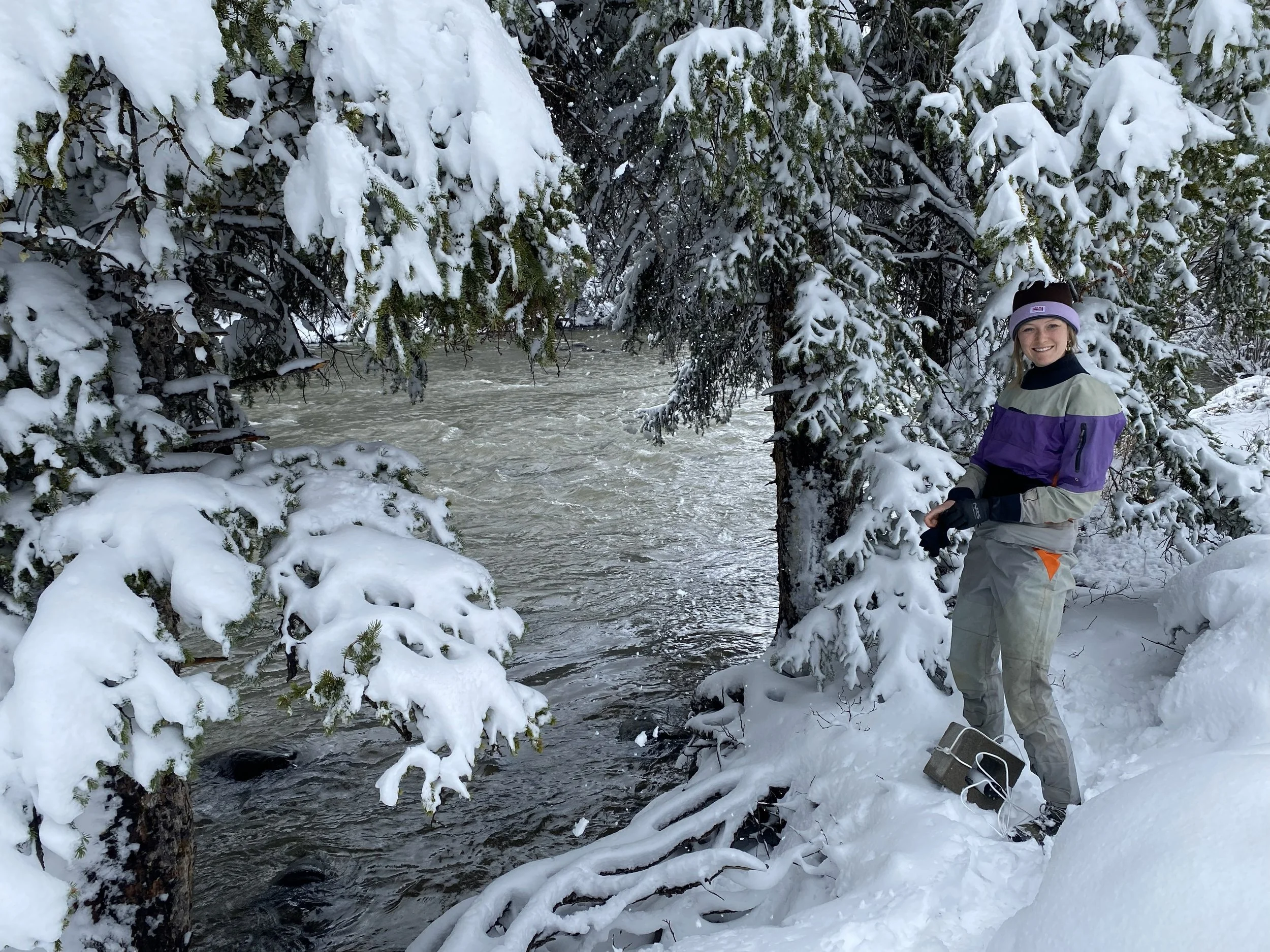
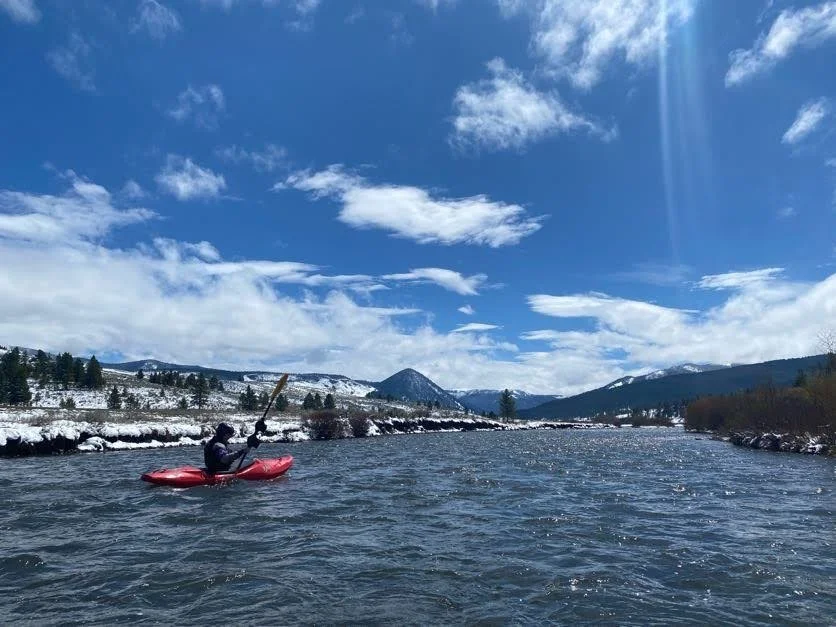
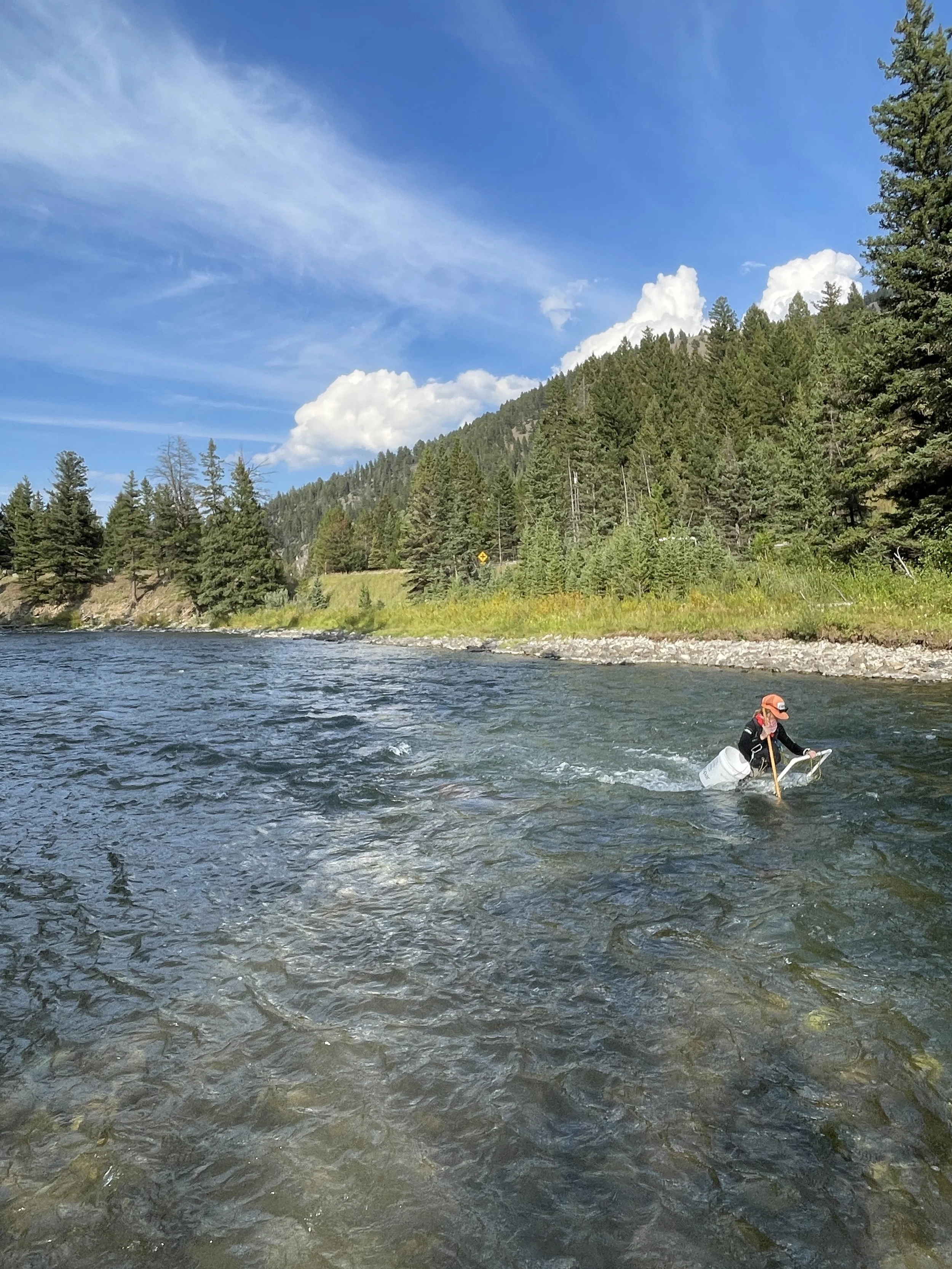
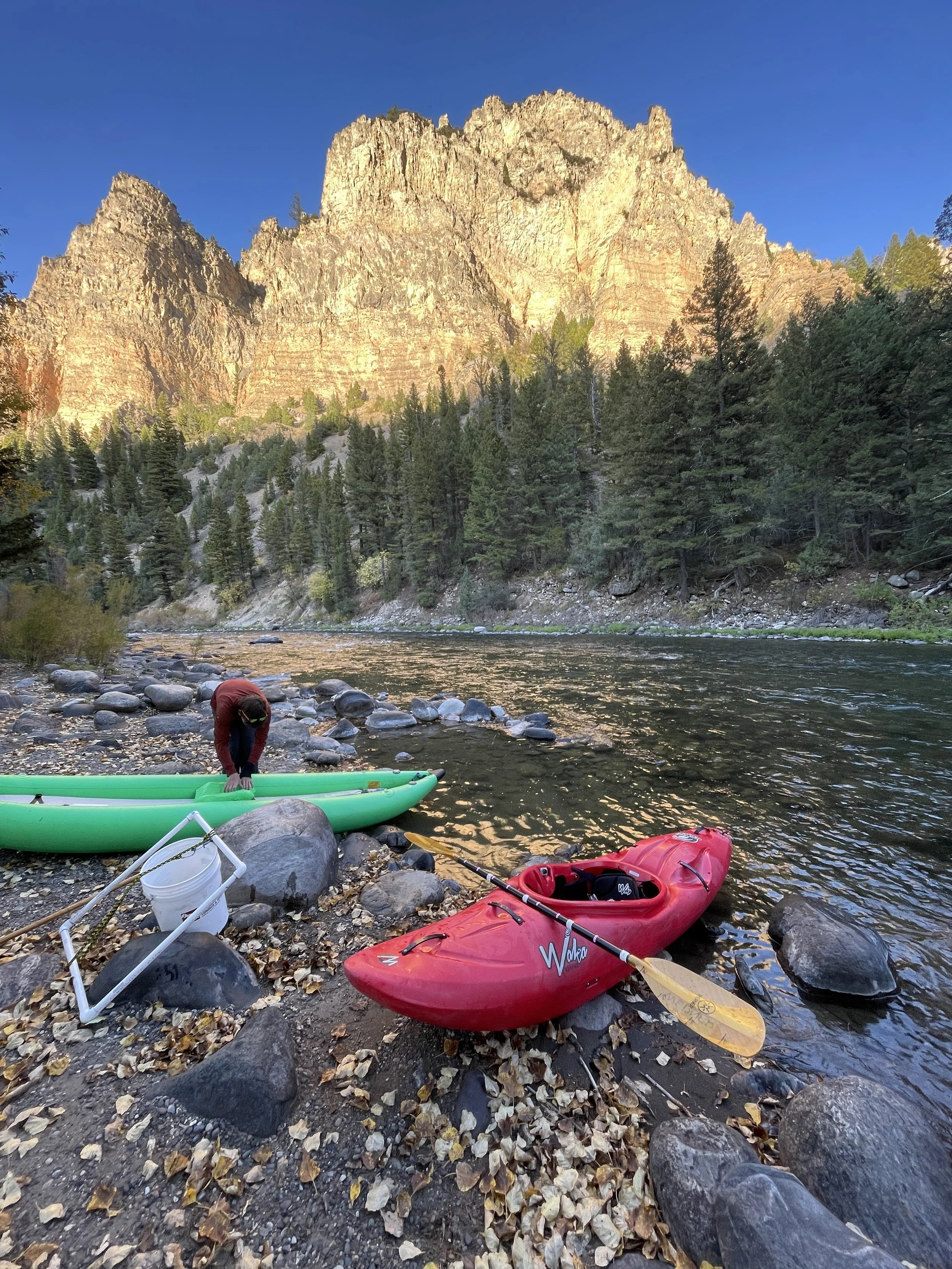
Cora grew up in the Gallatin watershed, kicking around Belgrade, Montana. Spoiled by all types of supreme outdoor recreation, she never wants to leave. Akin to her love for the Gallatin Valley is her love for science, which led her to begin her scientific career in Montana State University’s Ecology Department. Studying big waves from her whitewater kayak narrowed her interests to water science. After graduating from MSU’s Ecology Department in 2019, Cora spent four seasons in Wyoming, working for federal and state agencies. Cold smoke powder brought her back to Bozeman in the winters, where she skied by day and mapped wetlands by night. Cora hopes to continue to ask science questions that are both fundamental and applied. She strives to conduct sound science and communicate clearly with all types of audiences. Cora believes successful resource conservation requires technical science and an understanding of fellow Montanans and our diverse lifestyles.